
Courses Offered

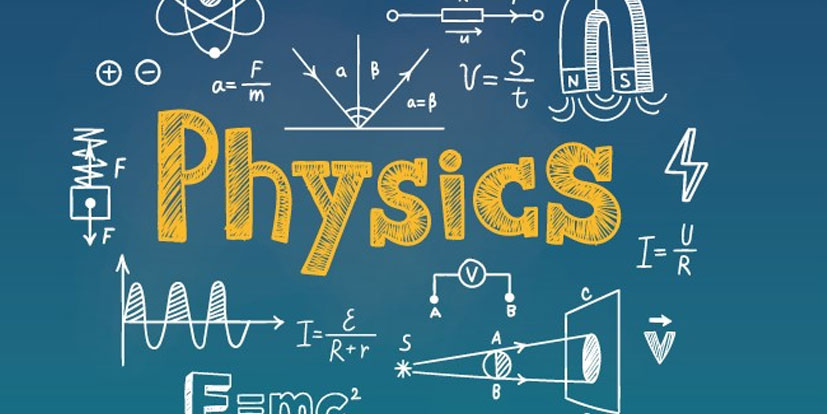
B.Sc. Physics
🏛️ About the Department
The Department of Physics at ESSM College of Arts and Science is committed to academic excellence, scientific innovation, and student empowerment. The department is equipped with well-maintained laboratories, modern instruments, and experienced faculty members who inspire students to explore the fundamental principles of the universe. Emphasis is placed on conceptual clarity, experimental learning, and research orientation to foster scientific temper among students.
🎓 About the Course
The Bachelor of Science in Physics is a three-year undergraduate degree designed to provide students with a deep understanding of classical and modern physics. The course integrates theoretical knowledge with practical experimentation to create a strong foundation in mechanics, thermodynamics, optics, electromagnetism, and quantum physics. It encourages curiosity-driven learning and prepares students for advanced studies, research, and careers in science and technology.
📚 About the Curriculum
The B.Sc. Physics curriculum is framed as per the University of Madras regulations. It includes a combination of core subjects, allied subjects, practical lab work, and soft skill components.
Core Subjects include
- Mechanics, Thermal Physics, Optics, and Electricity & Magnetism
- Quantum Mechanics, Atomic and Nuclear Physics
- Electronics and Solid State Physics
- Mathematical Physics and Electrodynamics
Allied Subjects
- Mathematics I & II
- Chemistry I & II
The course also includes lab sessions in general physics, electronics, and optics to strengthen experimental skills and analytical thinking.
✅ Eligibility Criteria
- Students who have passed +2 (Higher Secondary) examination with Physics and Mathematics as core subjects are eligible to apply for this program.
- Students with a science background (Physics, Chemistry, Mathematics) will be given preference.
💼 Career Opportunities
A degree in Physics opens the door to a wide range of career paths in both academic and industrial sectors. Graduates can pursue:
- Higher Studies: M.Sc. in Physics, Applied Physics, Astrophysics, or related fields
- Research & Development: National labs (ISRO, DRDO, BARC), research assistant roles
- Teaching & Academics: School and college-level teaching with further qualifications
- Technical Roles: Scientific assistant, quality control analyst, lab technician
- Government Exams: UPSC, SSC, TNPSC, and scientific officer positions
- Other Fields: Data analysis, software testing, renewable energy, electronics industry